


'We Must Protect Players' - How Should Professional Tennis Avoid Hitting a Breaking Point?
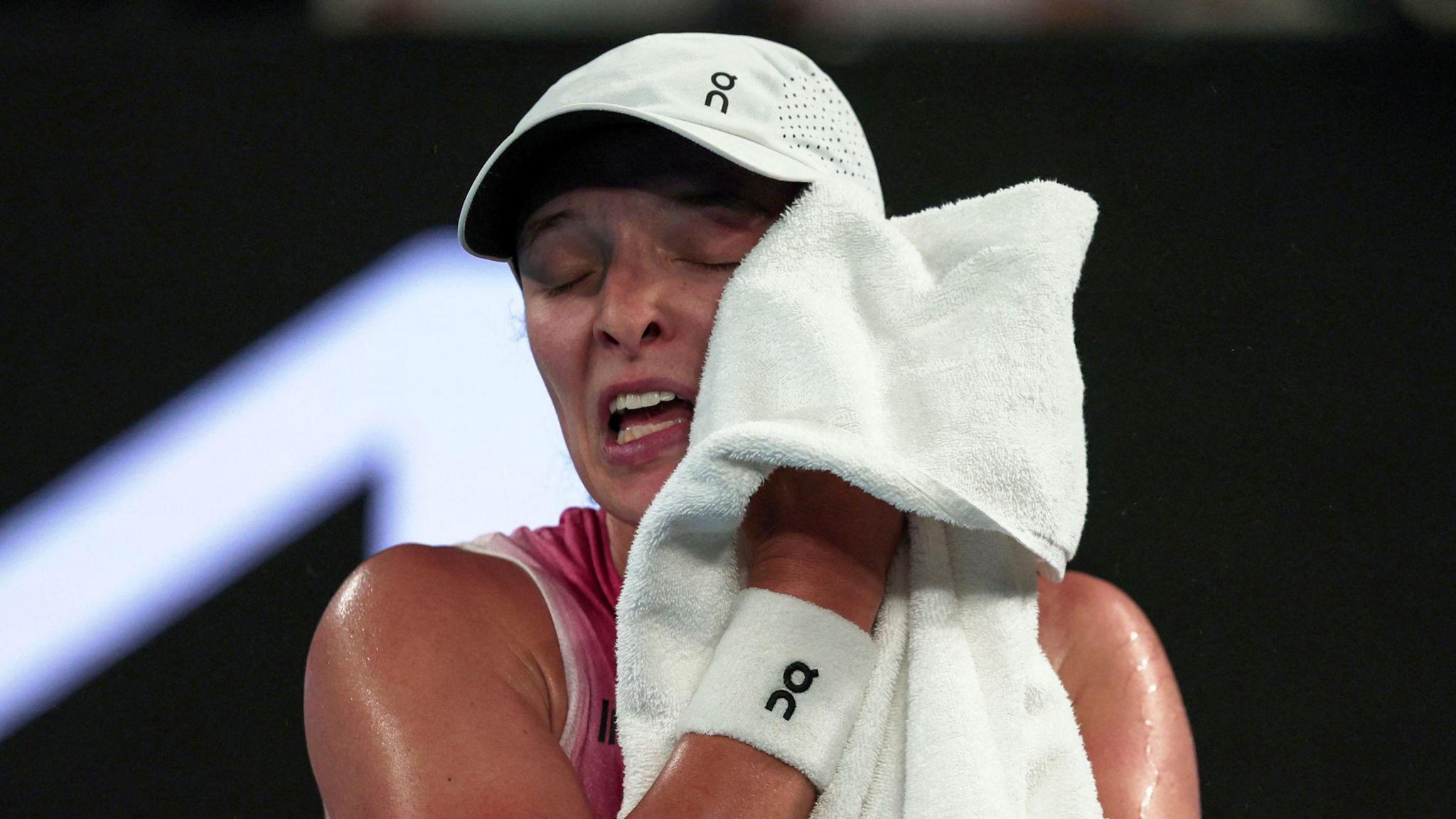
Top-ranked star Iga Swiatek commented in September that she feels the season is "excessively lengthy and demanding."
At the point when Daria Kasatkina concluded her 2025 season early in October, the ex-top ten player described how she had "hit a wall."
"The calendar is overwhelming. Psychologically and emotionally, I am drained, and, regrettably, I'm not alone," she stated.
Ukraine's Elina Svitolina, a former Wimbledon final four contender, had previously announced she was not in "the mental space" to carry on, while reigning Grand Slam champions Iga Swiatek and Carlos Alcaraz additionally believe the calendar is excessively lengthy.
This issue is still being argued as the world's leading tennis players gather again in Australia for the start of the 2026 season.
A somewhat extended off-season than 2025 has been welcomed. Nevertheless, a few weeks is not considered adequate time for proper rest before training starts for an 11-month campaign seen as among the most grueling in professional sport.
"The demands of tennis are harder than ever before," stated Dr. Robby Sikka, medical director at the Professional Tennis Players' Association (PTPA).
"The duration of play has increased, players are faster, they're hitting the ball harder.
"We owe it to our players to protect them and give them a more sustainable sport."
So what is being done and what additional measures could be enacted?
Condensing the Tour Schedule
The 2025 season lasted 47 weeks for many players on the ATP circuit, commencing with the United Cup team event in late December 2024 and concluding with the Davis Cup final in late November.
The WTA Tour season ended two weeks earlier when the WTA Finals wrapped up in early November. The ITF moved the Billie Jean King Cup Finals forward to September to alleviate scheduling concerns.
The ATP Tour says it does not take the concerns of the players "without seriousness," while the women's tour asserts player welfare will "perpetually be the highest focus."
That failed to satisfy the PTPA, which initiated a lawsuit against the men's and women's tours in March, pointing to "unfair practices and a clear neglect of athlete well-being."
Revamping the calendar is an apparent fix but cannot be achieved easily given the intricate web of tennis governance, where the four Grand Slams, ATP, WTA, and ITF each have major stakes.
"It is crucial to evaluate whether we can reclaim time at the end of the year for an extended off season, or can we create space during the season so there is a brief respite," said Dr. Sikka.
Former world number one Andy Roddick, a long-time advocate for change, says the season should not go past 1 November.
The ATP Tour has cut the number of events which count towards the rankings for 2026, which it believes will reduce "overall demands" on the players.
"A factor frequently ignored: players choose their own schedules," stated ATP chairman Andrea Gaudenzi.
"Such autonomy is uncommon in elite athletics. But with that comes responsibility - knowing when to push and when to recover."
Extending several required events across a fortnight - creating so-called 'extended events' - has also been criticized.
"In my view, athletes are more psychologically drained and exhausted because they're being on the road longer," said Britain's former men's world number one, Andy Murray.
In addition to mental burnout, there are concerns about the rising physical demands.
Players experience a higher rate of upper-body injuries in specific periods, according to available data.
The organization says these "foreseeable patterns" are down to the tour schedule layout and the switches in court surfaces.
Reducing Late Finishes & Standardizing Equipment
When a notable match at the Australian Open ended in the wee hours in 2023, it was expected to drive reform.
In 2024, the tours implemented a new rule preventing matches beginning past 11pm.
But there have continued to be instances of matches concluding long after midnight - which medical experts cannot be allowed to be "romanticised".
"When you are done playing you just don't go home," explained Dr. Sikka.
"There are press obligations, recovery sessions, and physio appointments. Your day doesn't finish until much later.
"There is insufficient opportunity for the body and mind to heal. This is a unique demand in the sporting world."
Data suggests a player is considerably more susceptible to be injured during a evening game.
A lack of standardization in tournament equipment - leading to changes in feel and performance - has been pointed to as a source of a rise in upper body injuries.
"My career has been plagued by injuries to the arm and wrist," said one top British player, "and I observe these types of injuries becoming more common."
A former US Open champion, who retired last year with an chronic wrist problem, argues tournaments in the same circuit should use one uniform ball.
"Implementing this would not be overly complex - the same ball for clay, the same for hard and the same for grass. That would be incredibly useful to the players," he said.
The tours began using a more unified ball-approval process during 2025 and project "total consistency" in the coming years.
Take Lessons from the NFL & Shield Developing Athletes
Medical researchers believe tennis must emulate how American team sports use data to inform the health of its stars.
Following data-led analysis, the NFL mandated consistent playing surfaces and enhanced helmet technology to reduce the risk of injury.
"The league has altered its regulations using concrete research," said an analytics expert whose firm provides data to monitor player welfare.
"The financial returns have increased dramatically because their games are so competitive and they're maintaining a healthy roster.
"They are investing heavily in their stated goals by protecting athletes and investing hugely – that model is the exemplar."
Other leagues have implemented policies aimed at protecting specific positions, limiting their workload at the professional level and putting guidelines for juniors.
Some retired players believe the strain put on the upper body of tennis players from a very early stage is a key element in their injuries later on.
"We pick up a racket as kids and have so many iterations of our groundstrokes," said the former champion.
"Eventually, the wrist bears the brunt. Way more players have problems with the wrist. I think the problem is the many, many repetitions."
Players 'Motivated' for Change - What Do They Want?
An rising contingent of players are becoming vocal about the demands placed on them.
Current world number ones are among a coalition of top players applying force on the Grand Slams with calls for a increased portion of tournament income, as well as meaningful consultation about the calendar extent, extended events and fixture planning.
Last year, a top-ten American player said it was "absurd" he was only able to take one week off before the new season.
Sympathy can be in short supply, though, given top players sometimes commit to lucrative exhibition events.
One Grand Slam champion from Britain says the grind is a "challenge" but thinks top players "complaining about the calendar" is not a good look.
"{Uniform